Chinese vs German Laser Cutters: What's the Real Difference?
A German TRUMPF costs 3x what a Chinese Bodor does. Is it 3x better? We talked to shop owners running both to find out what you actually get for the money.
The Short Answer
German machines aren't 3x better—but they are measurably more refined, with superior service networks. The value equation depends on your situation:
- Buy German if: High uptime is critical, you lack in-house maintenance, or customers require it
- Buy Chinese if: You have technical capability, can tolerate learning curves, and need budget for growth
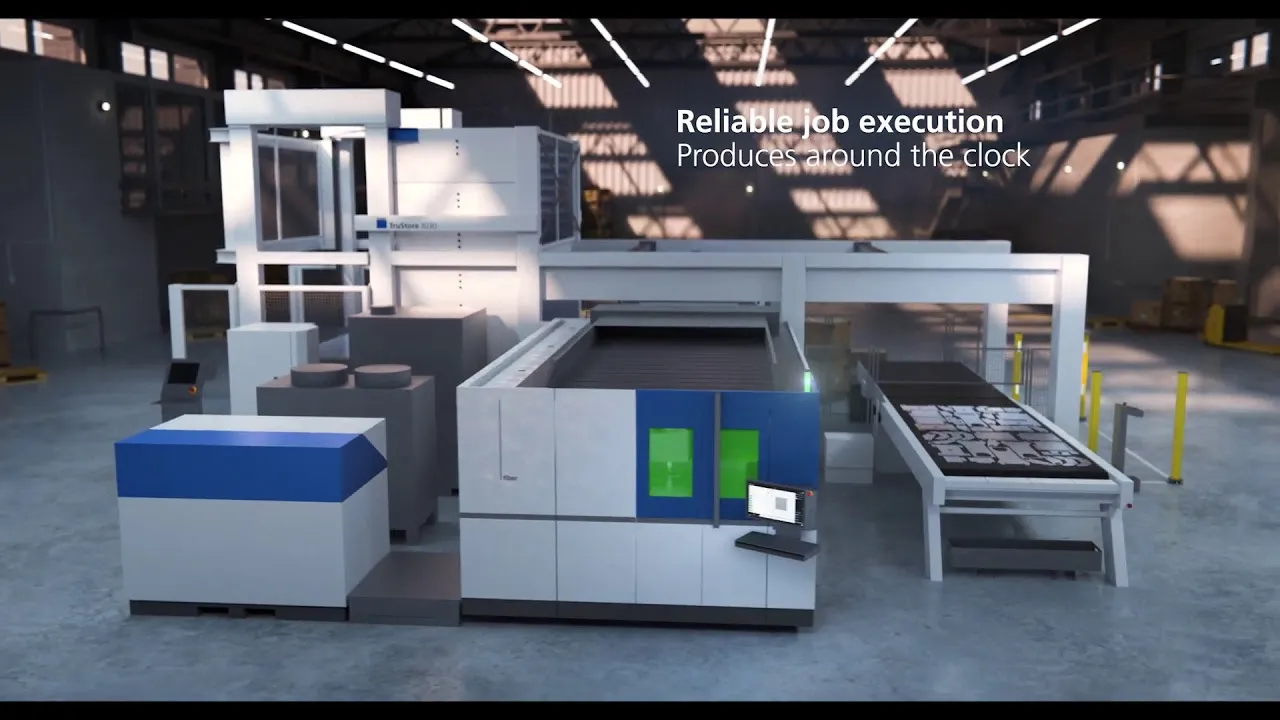
The Core Components Are Often Identical
Here's what most people don't realize: many Chinese laser cutters use the same fiber laser sources as European machines. IPG Photonics (American) supplies fiber sources to TRUMPF, Bystronic, HSG, and Bodor alike.
The differences are in everything else: frame construction, motion systems, control software, cutting head design, and service infrastructure.
Where German Machines Excel
1. Dynamics and Precision
German machines typically achieve higher positioning accuracy (±0.03mm vs ±0.05mm) and faster acceleration. On complex parts with many small features, this translates to 10-20% faster cycle times and better edge quality.
2. Software Refinement
TRUMPF's TruTops and Bystronic's BySoft are mature, well-integrated ecosystems. Automatic parameter optimization, intelligent nesting, and seamless ERP integration save hours per week on a busy shop floor.
3. Service Response
This is the real differentiator. TRUMPF has service technicians within driving distance of most industrial areas. When a Chinese machine goes down, you might wait weeks for parts or remote support in a different timezone.
Where Chinese Machines Compete
1. Raw Cutting Performance
On straightforward mild steel cutting, the difference is hard to see. A 12kW Bodor or HSG cuts 10mm steel at effectively the same speed and quality as a 12kW European machine.
2. Capital Efficiency
The savings are real: $150K-200K for a quality Chinese 6kW vs $350K-450K for a German equivalent. That's a second machine, or a year of runway.
3. Improving Rapidly
The quality gap has narrowed dramatically since 2018. Brands like HSG, Bodor, and Han's Laser have invested in precision manufacturing and quality control.
German Machines in Our Database
Chinese Machines in Our Database
Total Cost of Ownership: A Reality Check
Don't just compare sticker prices. Factor in:
- Consumables: OEM parts for German machines cost 2-3x generic
- Downtime: What does an hour of lost production cost you?
- Resale: German machines hold value better
- Training: Chinese machines often have steeper learning curves
Our Recommendation Framework
Lean German If...
- You run 2-3 shifts and downtime costs $500+/hour
- Your customers are aerospace, medical, or automotive Tier 1
- You don't have in-house maintenance capability
- The machine is your only cutter (no backup)
Lean Chinese If...
- You have technical staff who can troubleshoot
- Primarily cutting mild steel for general fab
- Capital is tight and you need production capacity now
- You're buying as a second/backup machine
The Middle Ground: Japanese and Swiss
Don't overlook Amada, Mazak (Japan) or Bystronic (Swiss). They often offer European-level quality with more competitive pricing than TRUMPF. Amada in particular has strong dealer networks in North America.
Compare Side-by-Side
Add German and Chinese machines to our comparison tool and evaluate the specs directly.