Laser Cutting Nozzle Selection Guide
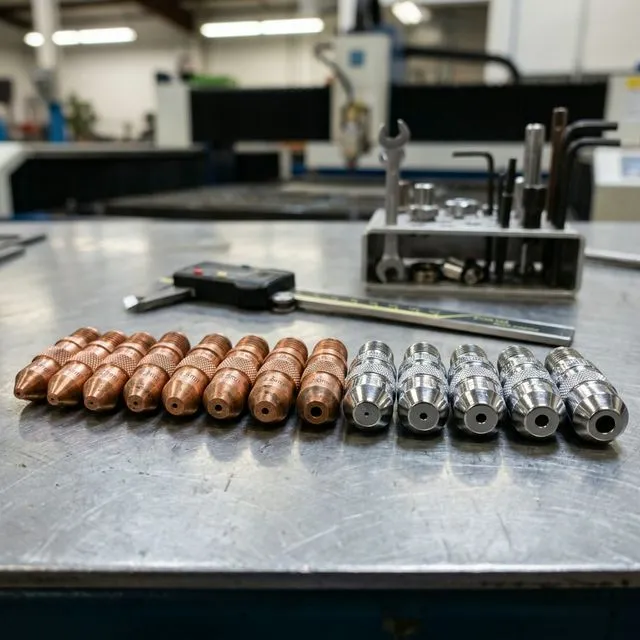
The cutting nozzle is critical for laser cutting quality and efficiency. Proper nozzle selection, sizing, and maintenance directly impact cut quality, gas consumption, and consumable costs. This guide covers nozzle types, sizing, and optimization strategies.
Nozzle Quick Selection Path
Use this shorter nozzle page as a quick selector, then validate the choice against the full diameter chart, gas-flow demand, kerf compensation, and expected nozzle life. For production release, record material, thickness, gas, pressure, standoff, and nozzle diameter together.
Nozzle Types
Single Layer Nozzle (Standard)
Characteristics:
- • Simple conical design
- • Lower cost ($40-60)
- • Universal compatibility
- • 50-80 hour typical life
Best For:
- • General purpose cutting
- • Thin-medium materials (1-6mm)
- • Nitrogen and oxygen cutting
- • Cost-sensitive operations
Double Layer Nozzle
Characteristics:
- • Dual gas flow paths
- • Better gas flow control
- • Higher cost ($80-120)
- • 80-120 hour life
Best For:
- • High-quality nitrogen cutting
- • Medium-thick materials (5-15mm)
- • Reduced dross requirements
- • Production environments
High-Speed Nozzle
Characteristics:
- • Optimized supersonic flow
- • Smaller orifice tolerance
- • Premium cost ($100-150)
- • 60-100 hour life
Best For:
- • Thin material (<3mm)
- • Maximum speed applications
- • High-volume production
- • Stainless steel cutting
Nozzle Size Selection by Material
| Material Type | Thickness | Nozzle Diameter | Gas Pressure | Standoff |
|---|---|---|---|---|
| Stainless Steel (N₂) | 1-2mm | 1.5-2.0mm | 12-14 bar | 0.6-0.8mm |
| Stainless Steel (N₂) | 3-5mm | 2.5-3.0mm | 14-16 bar | 0.8-1.2mm |
| Stainless Steel (N₂) | 6-10mm | 3.5-4.0mm | 16-20 bar | 1.0-1.5mm |
| Mild Steel (O₂) | 3-8mm | 1.5-2.0mm | 0.5-1.0 bar | 0.8-1.2mm |
| Mild Steel (O₂) | 10-20mm | 2.5-3.5mm | 1.0-2.0 bar | 1.2-2.0mm |
| Aluminum (N₂) | 2-6mm | 2.5-3.5mm | 15-20 bar | 0.8-1.5mm |
General Sizing Rule:
Nozzle diameter ≈ Material thickness × 0.5 (for nitrogen cutting). Thicker material needs larger nozzle for debris evacuation. Oxygen cutting uses smaller nozzles due to lower pressure.
Major Nozzle Manufacturers
Precitec (Premium)
- Origin: Germany
- Price Range: $60-150
- Strengths: Highest quality, longest life, excellent gas flow
- Popular Models: ProCutter, HighSpeed
- Best For: High-end systems, production
Raytools (Mid-Range)
- Origin: Switzerland/China
- Price Range: $40-90
- Strengths: Good quality-price ratio, wide compatibility
- Popular Models: BT series
- Best For: Mid-range systems, job shops
WSX (Trumpf Compatible)
- Origin: China
- Price Range: $30-70
- Strengths: Trumpf thread compatible, budget-friendly
- Quality: Decent for non-critical applications
- Best For: Cost-conscious operations
OEM Nozzles
- Examples: Trumpf, Bystronic, Amada
- Price Range: $80-180
- Strengths: Guaranteed compatibility, warranty coverage
- Drawback: Highest cost
- Best For: Warranty compliance, critical applications
Nozzle Optimization Tips
Proper Installation
- • Clean threads before installation
- • Hand-tighten, then wrench 1/4 turn
- • Check centering (beam should be centered in orifice)
- • Verify standoff distance with calibration tool
- • Document installation date for tracking
Maintenance Schedule
- • Inspect orifice daily (magnifier or microscope)
- • Clean exterior with brass brush
- • Replace every 50-80 hours (standard use)
- • Replace every 30-50 hours (thick plate/aluminum)
- • Keep spares on hand (avoid downtime)
Signs of Wear
- • Visible orifice damage or elongation
- • Increased dross formation
- • Declining cut quality
- • Increased gas consumption
- • Asymmetric kerf width
Cost Optimization
- • Buy in bulk (10-20% discount)
- • Match nozzle quality to application
- • Track usage hours per nozzle
- • Don't over-tighten (damages threads)
- • Premium nozzles for production, standard for prototyping
Nozzle-Related Issues
Issue: Excessive Spatter on Nozzle
Causes: Too close standoff, contaminated nozzle, worn orifice
Solutions:
- Increase standoff distance 0.2-0.5mm
- Clean nozzle exterior regularly
- Replace if orifice shows wear
- Check beam centering
Issue: Uneven Cut Quality
Causes: Off-center beam, damaged orifice, incorrect pressure
Solutions:
- Perform beam centering check
- Inspect nozzle orifice for damage
- Verify gas pressure consistency
- Replace nozzle if asymmetric wear
Nozzle Cost Analysis
Annual Nozzle Cost Example
Scenario: Mid-size fabricator, 2000 annual cutting hours
Nozzle life: 60 hours average
Nozzles needed: 2000 / 60 = ~34 nozzles/year
Cost breakdown:
- • Premium nozzles ($100): $3,400/year
- • Mid-range nozzles ($60): $2,040/year
- • Budget nozzles ($40): $1,360/year
Recommendation:
Use premium nozzles for production (better quality, longer life reduces changes). Use mid-range for prototyping/job shop work. Annual savings from premium nozzles' longer life often offsets higher unit cost.
Data Sources
- • Precitec Technical Documentation 2024: Nozzle specifications and selection
- • Raytools Application Guides: Sizing recommendations
- • Trumpf Service Manual: Nozzle maintenance and replacement intervals
- • Field data: Industrial nozzle performance tracking
Disclaimer: Nozzle selection depends on specific machine, material, and quality requirements. Always follow machine manufacturer recommendations for critical applications.