CO₂ Laser Applications: Where 10.6μm Wavelength Excels
Key Takeaway
CO₂ lasers are irreplaceable for non-metallic materials. Wood, acrylic, fabric, leather, paper, and glass all absorb 10.6μm wavelength efficiently but are transparent to fiber laser wavelength. If your production includes non-metals, CO₂ is essential equipment.
While fiber lasers dominate metal cutting, CO₂ lasers remain the workhorse for non-metallic material processing. This guide covers every major CO₂ application along with recommended parameters and industry-specific considerations. For a balanced technology comparison, see our CO₂ vs Fiber Laser Comparison.
1. CO₂ Laser Material Compatibility
| Material | Cutting | Engraving | Typical Power | Edge Quality |
|---|---|---|---|---|
| Acrylic (PMMA) | Excellent | Excellent | 40-150W | Flame-polished, optically clear |
| Wood / Plywood | Excellent | Excellent | 30-100W | Charred edge, may need sanding |
| MDF | Excellent | Good | 40-130W | Clean, sealed dark edge |
| Fabric / Textile | Excellent | Limited | 30-80W | Sealed edge prevents fraying |
| Leather | Excellent | Excellent | 30-80W | Clean, sealed — no stitching needed |
| Paper / Cardboard | Excellent | Possible | 20-60W | No mechanical distortion |
| Rubber / Silicone | Good | Good | 40-100W | Good with proper extraction |
| Glass | No | Excellent | 20-60W | Frosted surface engraving |
| Ceramic / Stone | No | Good | 30-80W | Surface marking only |
2. Industry-Specific Applications
Signage & Display
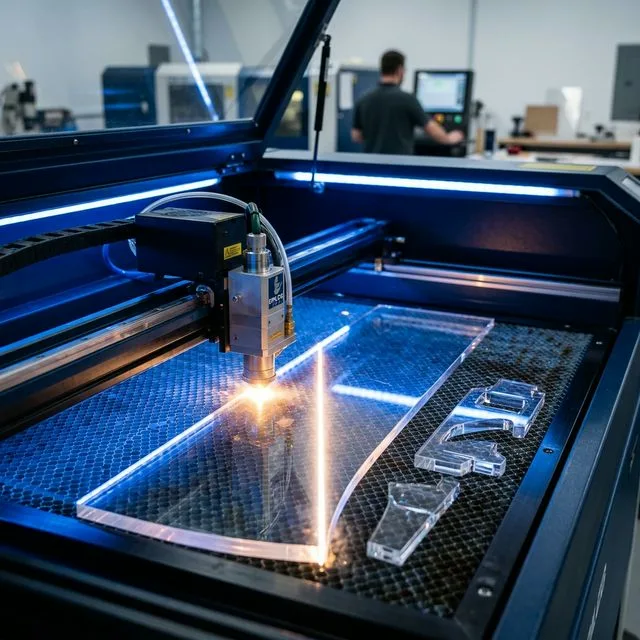
CO₂ lasers produce flame-polished acrylic edges that are optically clear without post-processing. This makes them ideal for illuminated signage, point-of-sale displays, and architectural features.
Textile & Fashion
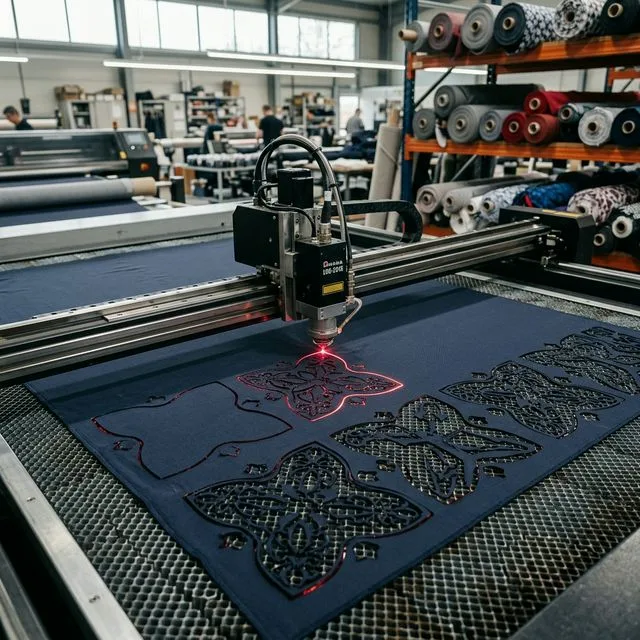
Laser cutting seals fabric edges, preventing fraying without mechanical stress. This enables intricate patterns impossible with die-cutting. Used for custom sportswear, automotive interiors, and technical textiles.
Packaging & Die-Cutting
Digital die-cutting with CO₂ eliminates physical dies ($500-2,000 each). This enables short-run packaging, rapid prototyping, and personalized packaging at mass-production speeds.
Woodworking & Architecture
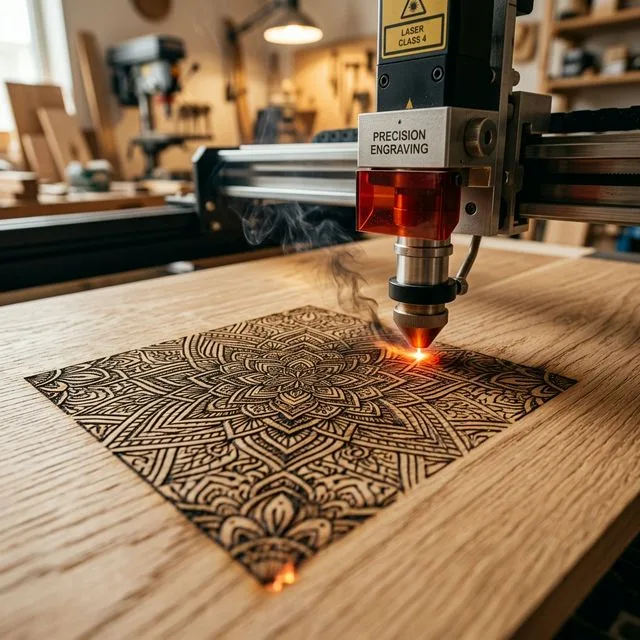
Precision cutting of MDF, plywood, and veneer for architectural models, decorative panels, furniture components, and acoustic panels. CO₂ handles complex 2D profiles that would be impossible or impractical with CNC routing.
3. CO₂ vs Fiber: Quick Decision Guide
The "CO₂ or Fiber?" question has a simple answer based on your material mix:
Frequently Asked Questions
What materials can CO₂ cut that fiber cannot?
All organic and most non-metallic materials: wood, MDF, acrylic, fabric, leather, paper, cardboard, rubber, foam, and cork. CO₂ also engraves glass, ceramic, and stone. These materials are transparent to fiber laser wavelength and cannot be processed with fiber technology.
Can CO₂ lasers cut metal?
Yes, but 40-300% slower than fiber lasers. CO₂ is adequate for metal if volume is low and you also need non-metal capability. For dedicated metal shops, see our Fiber Laser Advantages guide.
What industries use CO₂ lasers most?
Signage (acrylic), textile/fashion (fabric/leather), packaging (die-cutting), woodworking (MDF/plywood), craft/personalization (engraving), and medical devices (polymer cutting).
Related Guides
Cutting parameters are representative values for mid-range industrial CO₂ lasers (80-150W sealed tube). High-power RF-excited CO₂ lasers (500W+) are used for industrial-scale processing at significantly higher speeds. Always perform test cuts on sample material before production runs.